Robot training works best when it teaches one clear task, measures the result, and gives the robot another try. That approach is making automation easier to adapt when a site, object, or work step changes.
- Training turns recorded actions into robot movement.
- Simulation lets a robot practise before it reaches equipment or people.
- A useful system shows where the robot fails, not only when it succeeds.
Training starts with a task
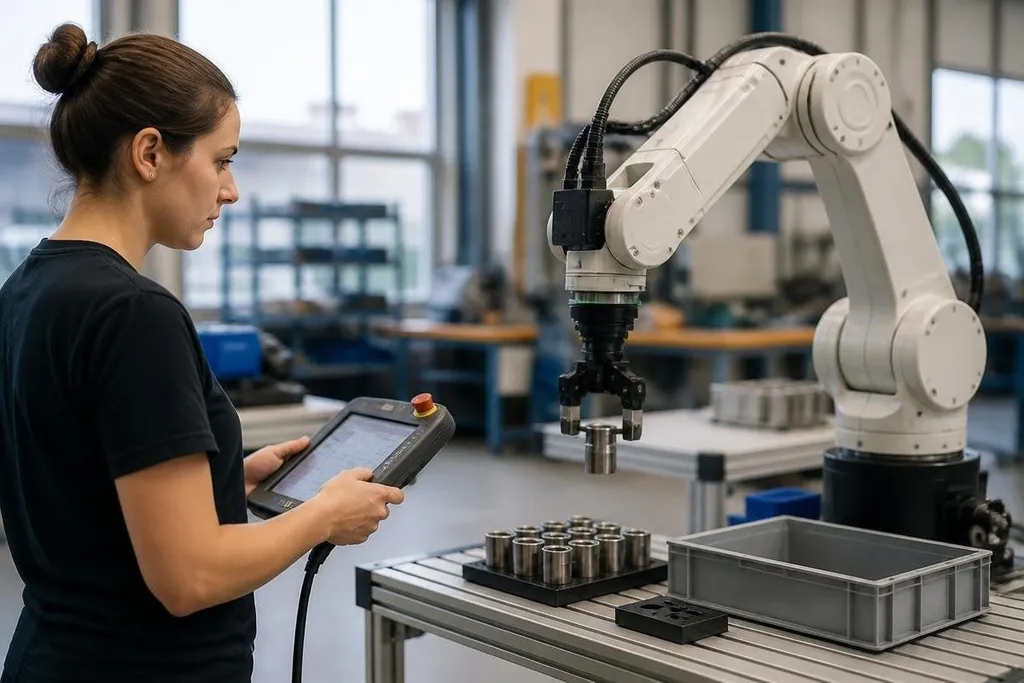
A training system needs a target. That target might be picking an item, sorting parts, checking a surface, or driving along a marked route. The robot then links what its sensors see with the movement that should follow.
A camera may detect an object. A force sensor can tell the robot when its gripper touches that object. The control software uses those inputs to choose an arm movement, a wheel speed, or a stop. Training connects the input to the action.
This matters because many work tasks change in small ways. A box may sit at a different angle. A part may weigh less than the last one. A mobile robot may face a new floor surface.
A fixed instruction can fail when the setting changes, but a trained system can adjust if its data includes enough useful variation.
Simulation cuts early risk
Simulation gives a robot a digital place to practise. The software can test movement, timing, and contact without placing a physical arm beside a worker or a production line.
That does not make simulation a copy of a working site. Real cameras have glare. Wheels slip. Grippers bend under load. A model that works in software can fail when those details appear in front of the robot.
Teams deal with this gap by changing the simulated conditions during training. They can vary object positions, lighting, surface grip, or sensor noise. The robot then sees a wider set of cases before a technician checks the same task on physical equipment.
The useful measure is transfer. A robot trained in simulation has to perform the task on hardware, with the same safety limits and the same objects it will meet during work.
People still supply much of the teaching
Teleoperation lets a person control a robot from a distance. The system records the operator's commands, the robot's sensor data, and the result of each action. That record can become training data for later attempts.
This method helps with tasks that are hard to describe in a rule list. A person may adjust grip pressure by feel, pause when an object shifts, or change the arm path after seeing an obstruction. Those choices can guide later attempts when the data keeps the timing and sensor readings with the movement.
The record still needs checking. A human operator may correct a mistake without explaining it, and a robot may copy an unsafe move if the system saves every action without review. Training data needs labels, limits, and a clear pass condition.
A training result matters only when it changes how the robot handles a real task. Robotics training reports from Robot24.com can place that result beside the task, test date, and human role, so you can judge whether feedback improved the next run.
Better feedback makes training useful
A robot needs more than a success signal. It needs to know what went wrong. Did the gripper miss the object, use too much force, arrive too late, or stop because a safety sensor detected a person?
That detail changes the next training round. Engineers can adjust the camera view, change the motion path, add examples, or set a safer speed. The system becomes easier to improve because each failed run points to a specific problem.
The same record can help people decide where automation fits. If a robot handles the main movement but needs a person to place every item, the task may still cost too much time. A training result has value only when it changes the work in a useful way.
A practical check before you buy
Use these points when you assess a robot training system:
- Name the task: Write the start point, end point, objects, and safety limits.
- Check the data: Ask who records it, what sensors it includes, and how errors get marked.
- Test transfer: Run the trained task on the actual robot, objects, floor, and lighting.
- Measure failure: Record missed grasps, stops, damage, cycle time, and human help.
- Plan updates: Set out who adds new examples when the task or object changes.
- Price the full work: Include setup, sensor changes, staff time, checks, and maintenance.
I'd judge a training system by how clearly it explains failure, not by how smooth its demo looks.
That standard will matter more as robots leave controlled trials and meet changing objects, people, and work areas. The useful systems will be the ones that can show what they learned, where it failed, and what a technician should change next.